
Historic Events
Hidden Secrets Behind the Statue of Liberty: Why Is It Green?
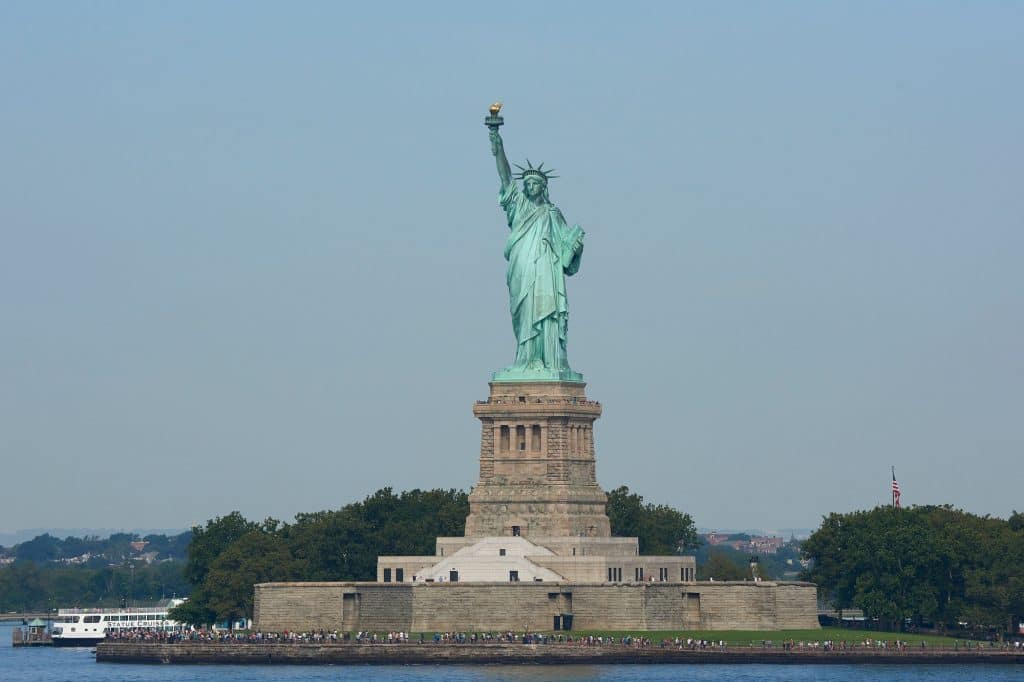
Dec
Édouard René de Laboulaye, a French political thinker and abolitionist, conceived the idea for the Statue of Liberty in the early 1860s. He proposed it as a gift from France to the United States, commemorating the enduring friendship between the two nations and celebrating America’s success in establishing democracy.
Details
The French sculptor Frédéric-Auguste Bartholdi was commissioned to design the statue. Bartholdi was inspired by classical Roman representations of liberty and envisioned a colossal figure holding a torch to symbolize enlightenment.
- Height: The statue is 305 feet (93 meters) tall from the pedestal’s base to the torch’s tip.
- Crown: The seven rays of the crown represent the seven continents and seven seas.
- Tablet: The tablet in her left hand is inscribed with July 4, 1776, the date of American independence.
- Broken Chains: A broken shackle and chain are at her feet, symbolizing the abolition of tyranny and oppression.
- The statue’s face is said to be modeled after Bartholdi’s mother.
- The statue cost approximately $250,000, equivalent to over $6.5 million today.
- It has been featured in countless films, books, and cultural references as a universal emblem of liberty.
The statue was dismantled and shipped to the United States in 350 pieces packed into 214 crates. It arrived in New York Harbor aboard the French frigate Isère on June 17, 1885.
Over four months, the statue was reassembled on Bedloe’s Island (later renamed Liberty Island). The pedestal, designed by American architect Richard Morris Hunt, was completed just in time.
Gift to the United States
The French government financed the statue, while the Americans built the pedestal. Joseph Pulitzer led fundraising efforts in the U.S., using his newspaper, The New York World, to rally support from ordinary citizens.
Conservation Concerns
In the early 1900s, there was debate about whether to clean the statue and restore it to its original copper color. However, experts decided to keep the patina because of its protective qualities and because it had become an iconic aspect of the statue’s appearance.
Why Is It Green?
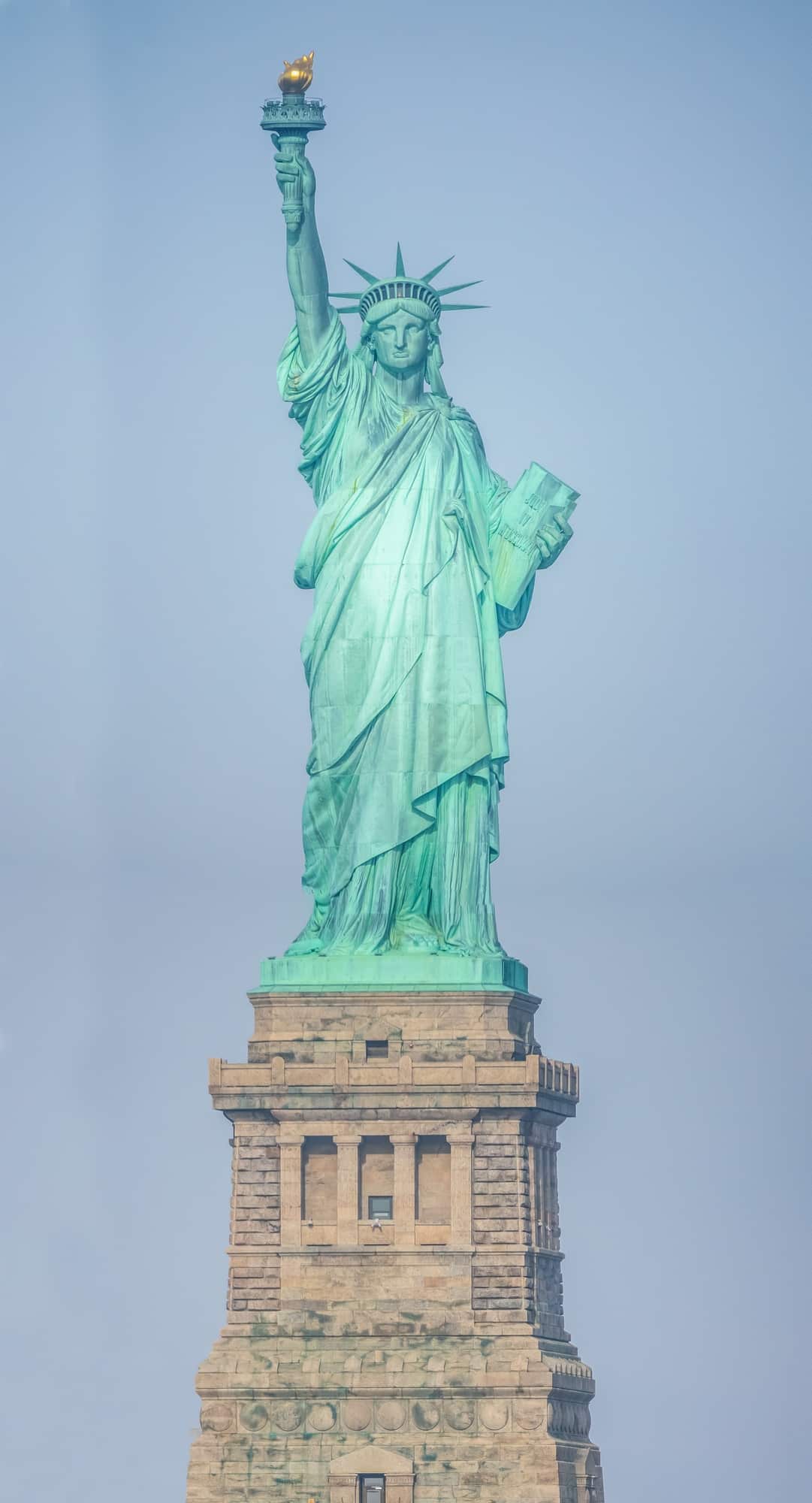
When the Statue of Liberty was first unveiled in 1886, it wasn’t green—it was a shiny reddish-brown color, reflecting the natural hue of copper. The statue is made of 3/32-inch copper sheets, about the thickness of two pennies.
Over time, the statue’s surface underwent a natural chemical reaction due to air, moisture, and pollution. This process, called oxidation, caused the copper to form a greenish layer known as patina.
The green patina, which combines copper carbonate, copper sulfate, and copper chloride, forms a protective layer that prevents further corrosion of the copper beneath. The process took about 20 years, giving the statue its current green hue.
The Patina’s Benefits
Interestingly, the patina acts like a shield, safeguarding the statue from the harsh elements, including acid rain and salt from the nearby ocean. Without it, the copper would degrade much more quickly.
Fun Fact: Why Doesn’t It Look Blue?
Copper turns blue in certain conditions (like in copper sulfate crystals). However, the specific environmental conditions around Liberty Island contributed to developing the green patina instead.
In the late 19th and early 20th centuries, the Statue of Liberty became a welcoming sight for millions of immigrants arriving in the United States through Ellis Island.
The statue’s association with immigration and hope was cemented by the 1883 poem “The New Colossus” by Emma Lazarus, which includes the famous lines:
“Give me your tired, your poor, Your huddled masses yearning to breathe free, The wretched refuse of your teeming shore. Send these, the homeless, tempest-tossed to me, I lift my lamp beside the golden door! “
Renovations and Preservation
The statue underwent several renovations, including a major restoration for its centennial in 1986. During this time:
- The original torch was replaced with a new one covered in 24-karat gold.
- Structural reinforcements were made to ensure its stability.
Conclusion
The Statue of Liberty inspires people worldwide, reminding us of the enduring power of freedom and the strength of international cooperation.
