
Founding Fathers
Alexander Hamilton: A Founding Father’s Legacy
Dec
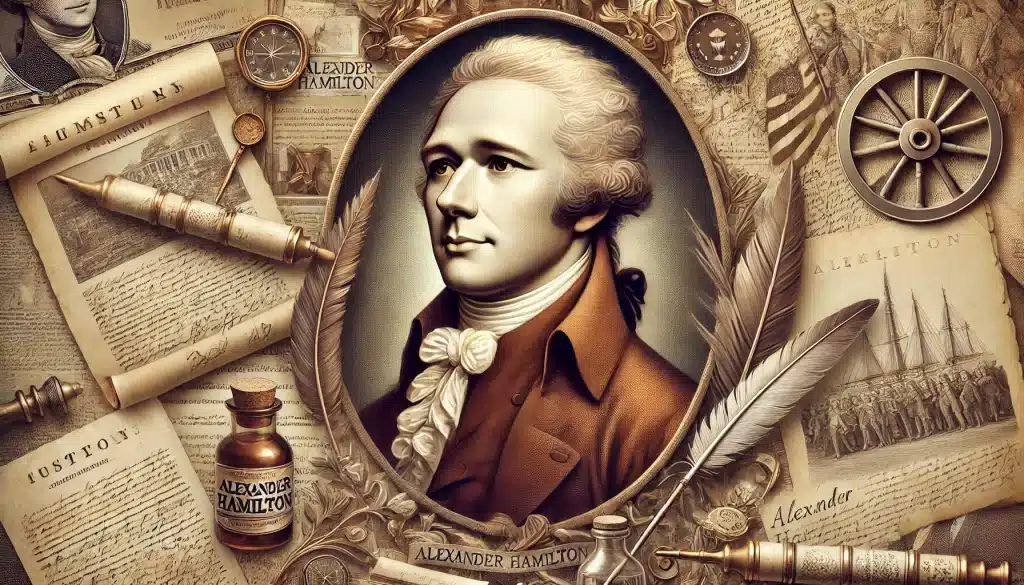
Alexander Hamilton’s life is one of the most remarkable stories in American history, blending ambition, intellect, and resilience with tragedy and controversy. A man of extraordinary talents, Hamilton rose from humble beginnings to become a pivotal figure in shaping the United States. His contributions as a statesman, economist, and visionary helped lay the foundation of the nation’s government and financial system. This article delves into the life of Alexander Hamilton, exploring his early struggles, meteoric rise, and enduring legacy.
Early Life and Background
Alexander Hamilton was born on January 11, 1755 (or 1757, as the exact year remains disputed) on the island of Nevis in the Caribbean. He was the illegitimate son of James Hamilton, a Scottish trader, and Rachel Faucette, a French Huguenot. Rachel’s previous marriage had ended in scandal, and her union with James was never legally recognized. These circumstances marked Hamilton as an outsider from birth, subject to social stigma and financial instability.
Hamilton’s early life was filled with hardship. His father abandoned the family when Alexander was young, and his mother died of illness when he was around 13. Hamilton and his brother, James Jr., left orphaned and were taken in by relatives and family friends. He secured a job as a clerk at a trading company in St. Croix, where he impressed his employers with his aptitude for business and writing.
In 1772, Hamilton’s talents caught the attention of local benefactors who raised funds to send him to the American colonies for education. He enrolled at King’s College (now Columbia University) in New York City, immersed himself in studies, and began forging connections with influential figures.
The Revolutionary War
Hamilton’s education was interrupted by the outbreak of the American Revolution. A fervent supporter of independence, Hamilton joined the New York Provincial Artillery Company in 1776. His skill and bravery on the battlefield quickly earned him recognition. He was soon invited to serve as an aide-de-camp to General George Washington, placing him at the center of the Revolutionary War’s strategic and political decision-making.
Hamilton became a trusted confidant and advisor as Washington’s aide, drafting critical correspondence and helping coordinate military operations. However, Hamilton’s ambition extended beyond a staff role. He longed for a combat command, which he finally received in 1781. At the Battle of Yorktown, Hamilton led a successful assault on British fortifications, contributing to the decisive American victory that ended the war.
Building a Nation
With the war’s conclusion, Hamilton turned his attention to nation-building. He married Elizabeth Schuyler, a prominent New York family member, which bolstered his social and political standing. Hamilton studied law and began practicing in New York City, quickly gaining a reputation as a brilliant legal mind.
Hamilton’s vision for a strong central government led him to play a key role in the 1787 Constitutional Convention. He argued passionately for a robust federal system to replace the weak Articles of Confederation. Though some delegates considered his views extreme, Hamilton’s contributions were instrumental in shaping the final document.
After the convention, Hamilton joined forces with James Madison and John Jay to write the Federalist Papers, a series of essays advocating for the Constitution’s ratification. Hamilton authored 51 of the 85 essays, addressing the necessity of a strong executive branch, the separation of powers, and the importance of a unified national government. These writings remain foundational texts in American political thought.
The First Secretary of the Treasury
In 1789, George Washington appointed Hamilton the first Secretary of the Treasury. In this role, Hamilton faced the monumental task of stabilizing the fledgling nation’s finances. His bold and innovative policies transformed the American economy and established the framework for modern financial systems.
Hamilton’s economic plan included three key components:
- Assumption of State Debts: Hamilton proposed that the federal government assume the debts incurred by the states during the Revolutionary War. This policy aimed to unify the nation and establish federal creditworthiness.
- Creation of a National Bank: Hamilton championed the establishment of the Bank of the United States to provide a stable currency, facilitate government borrowing, and regulate the nation’s financial institutions.
- Encouragement of Manufacturing: Hamilton advocated for protective tariffs and government support to promote industrial development, believing that a diverse economy was essential for national strength.
Hamilton’s policies were not without controversy. His vision of a strong central government and close ties between the government and financial elites drew fierce opposition from figures like Thomas Jefferson and James Madison. This ideological divide gave rise to the first political parties in the United States, with Hamilton’s Federalists clashing with Jefferson’s Democratic-Republicans.
Personal and Political Challenges
Intense rivalries and personal scandals marked Hamilton’s career. His outspoken nature and uncompromising principles made him many enemies. One of his most enduring feuds was with Aaron Burr, a fellow New Yorker and political rival.
In 1797, Hamilton’s reputation suffered a severe blow when he publicly admitted to an extramarital affair with Maria Reynolds. The revelation was part of a preemptive attempt to counter accusations of financial misconduct. While Hamilton’s honesty earned him some respect, the scandal tarnished his image and strained his marriage.
Despite these setbacks, Hamilton remained influential. He continued to shape public policy and mentor younger politicians, including future leaders like John Marshall and Gouverneur Morris.
The Duel and Hamilton’s Death
Hamilton’s rivalry with Aaron Burr reached its tragic climax in 1804. Burr, angered by Hamilton’s role in thwarting his political ambitions, challenged him to a duel. On July 11, 1804, the two men faced off in Weehawken, New Jersey. Hamilton reportedly fired his shot into the air, aiming to avoid bloodshed, but Burr’s bullet struck Hamilton in the abdomen. Mortally wounded, Hamilton died the following day.
Hamilton’s death shocked the nation and marked the end of a remarkable life. He was just 49 years old.
Legacy and Impact
Alexander Hamilton’s contributions to the United States are profound and far-reaching. His vision of a strong federal government, a stable financial system, and an economy driven by industry and commerce helped shape the nation’s development. The institutions he established, including the Treasury Department and the Bank of the United States, continue to influence American economic policy.
In recent years, Hamilton’s legacy has experienced a resurgence of interest, thanks partly to Lin-Manuel Miranda’s hit Broadway musical Hamilton. The show has introduced Hamilton’s story to new generations, highlighting his immigrant roots, intellectual brilliance, and indomitable spirit.
Conclusion
Alexander Hamilton’s life is a testament to the power of ambition and resilience. From his humble beginnings in the Caribbean to his role as a Founding Father, Hamilton’s journey exemplifies the American ideal of rising through merit and hard work. His vision and leadership continue to inspire, reminding us of the enduring importance of intellect, courage, and dedication in shaping the future.
OpenAI. (2024). ChatGPT [Large language model]. https://chatgpt.com
