
Presidents, Founding Fathers
James Monroe: Architect of the Era of Good Feelings
Dec
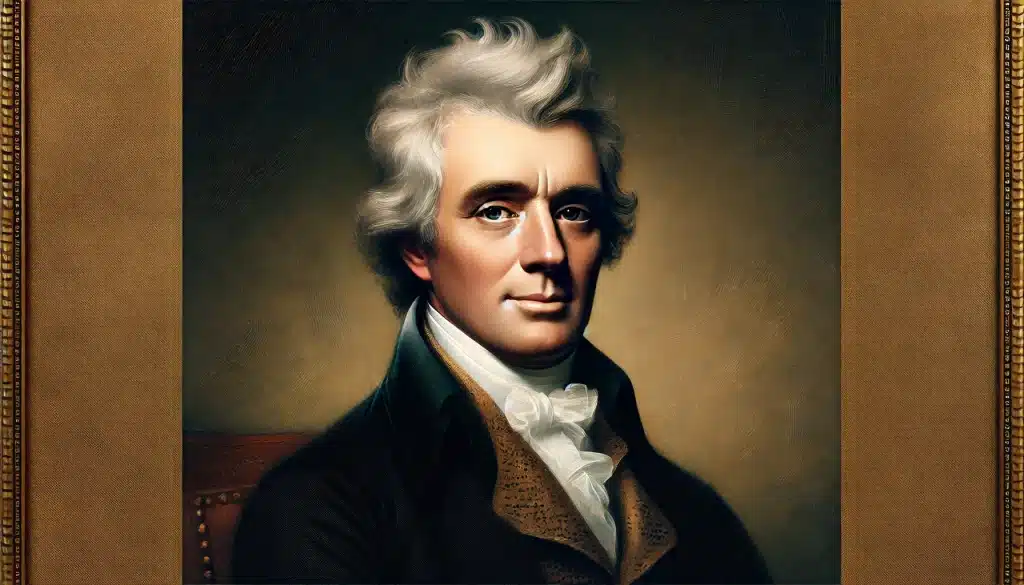
James Monroe, the fifth President of the United States, served two terms from 1817 to 1825. Born on April 28, 1758, in Westmoreland County, Virginia, Monroe was a pivotal figure in the early years of the American Republic, playing significant roles as a soldier, diplomat, and statesman. His presidency is best remembered for the “Era of Good Feelings,” marked by national unity and the Monroe Doctrine, a cornerstone of American foreign policy. This biography delves into Monroe’s life, from his humble beginnings to his lasting legacy as one of the nation’s Founding Fathers.
Early Life and Education
James Monroe was the son of Spence Monroe, a moderately prosperous planter, and Elizabeth Jones Monroe. Growing up in colonial Virginia, Monroe was exposed to the ideals of independence and self-governance from a young age. His education began at Campbelltown Academy, where he showed early promise. However, his formal studies were interrupted by the outbreak of the American Revolution.
In 1774, at the age of 16, Monroe enrolled at the College of William and Mary in Williamsburg, Virginia. The political tensions of the era profoundly influenced him, and he soon joined the fight for independence, leaving college in 1776 to serve in the Continental Army.
Military Service During the American Revolution
Monroe’s military career began as a lieutenant in the 3rd Virginia Regiment. He quickly rose through the ranks, distinguishing himself in battle. Monroe was severely wounded at the pivotal Battle of Trenton in December 1776 while leading a charge against Hessian forces. His bravery earned him the rank of captain and the lifelong respect of his fellow soldiers, including George Washington.
After recovering from his injuries, Monroe continued to serve in various capacities, including as an aide-de-camp to Major General William Alexander. However, the financial strain of supporting himself in the army eventually led him to resign his commission in 1778. Monroe’s time in the military instilled a deep sense of duty and shaped his views on governance and national security.
Early Political Career
After leaving the army, Monroe studied law under Thomas Jefferson, who became his lifelong mentor and friend. In 1782, he began his political career in the Virginia House of Delegates and was soon appointed to the Confederation Congress. Monroe advocated for a strong central government as a young legislator while remaining committed to states’ rights.
In 1786, James Monroe married Elizabeth Kortright, the daughter of a prominent New York merchant. The couple had three children and enjoyed a close, supportive relationship. Elizabeth’s grace and charm made her a popular figure in Washington society.
Role in the Ratification of the Constitution
James Monroe was a delegate to the Virginia Ratifying Convention in 1788, where he opposed the adoption of the U.S. Constitution, fearing it granted too much power to the federal government. Despite his reservations, Monroe’s contributions to the debate demonstrated his commitment to creating a balanced and effective system of governance. His concerns were later addressed through the addition of the Bill of Rights, which he supported.
Diplomatic Missions and Expansion of U.S. Territory
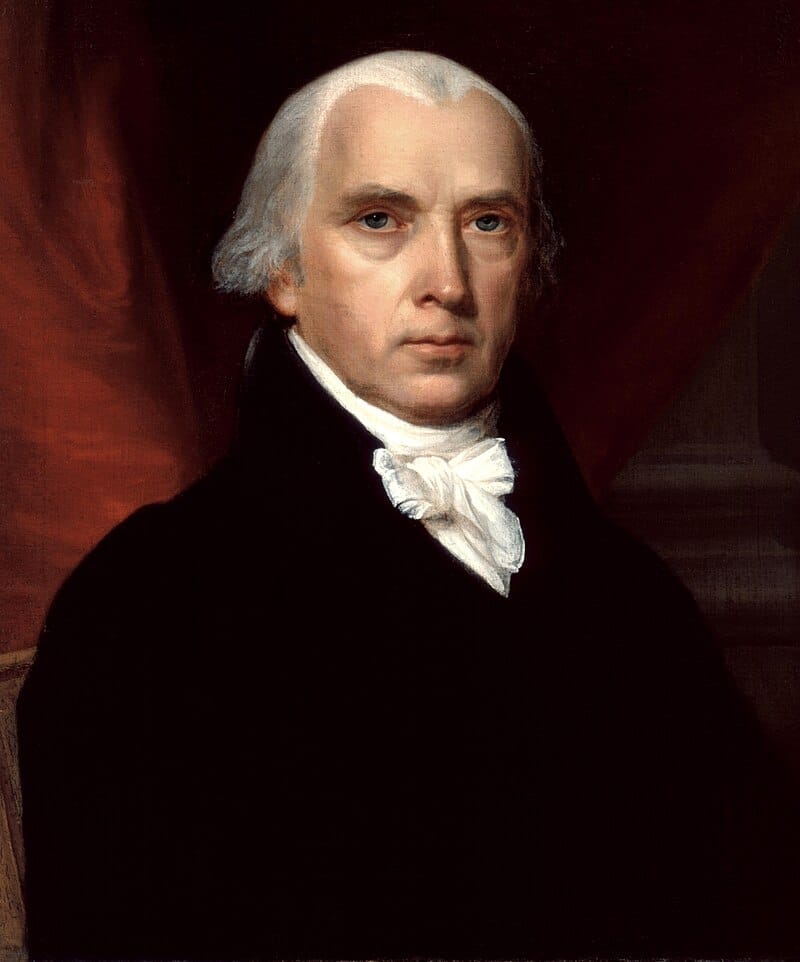
President George Washington soon called upon James Monroe’s diplomatic skills, and in 1794, he appointed him Minister to France. During his tenure, Monroe worked to strengthen the Franco-American alliance while navigating the complexities of the French Revolution. However, Washington and Secretary of State John Jay criticized his efforts, leading to his recall in 1796.
Despite this setback, Monroe’s diplomatic career flourished under President Thomas Jefferson. As Minister to France during Jefferson’s administration, James Monroe played a crucial role in negotiating the Louisiana Purchase in 1803, which doubled the size of the United States and secured its future as a continental power. He later served as Minister to Great Britain and Spain, further honing his diplomatic expertise.
Governor of Virginia and Secretary of State
James Monroe returned to Virginia politics in 1799 and served as governor for four terms. His leadership during this period was marked by efforts to improve public infrastructure and strengthen the state militia.
James Monroe joined President James Madison’s cabinet as Secretary of State. During the War of 1812, Monroe’s leadership was instrumental in rallying support for the war effort and managing diplomatic relations. He also briefly served as Secretary of War, making him one of the few individuals in American history to hold two cabinet positions simultaneously.
Presidency: The Era of Good Feelings
In 1816, James Monroe was elected President, defeating his Federalist opponent, Rufus King, in a landslide. His presidency ushered in the “Era of Good Feelings,” a time of relative political harmony following the decline of the Federalist Party. Monroe sought to promote national unity by appointing members of different political factions to his administration and embarking on goodwill tours across the country.
Domestic Achievements
James Monroe’s most significant domestic achievement was the Missouri Compromise of 1820, which temporarily resolved the contentious issue of slavery’s expansion into new territories. The compromise admitted Missouri as a slave state and Maine as a free state, maintaining the balance of power in the Senate. It also prohibited slavery in the Louisiana Territory north of the 36°30′ latitude line.
Monroe’s administration also prioritized economic development. He supported infrastructure projects such as roads and canals to facilitate commerce and communication. Establishing the Second Bank of the United States also helped stabilize the national economy after the financial turbulence of the War of 1812.
The Monroe Doctrine
Monroe’s most enduring legacy is the Monroe Doctrine, articulated in his annual message to Congress in 1823. Drafted primarily by Secretary of State John Quincy Adams, the doctrine declared that the Western Hemisphere was off-limits to further European colonization. It warned European powers against interfering in the affairs of independent nations in the Americas. This bold statement of American foreign policy asserted the United States’ role as a protector of the Western Hemisphere and laid the groundwork for its future influence in global affairs.
Challenges and Controversies
While Monroe’s presidency was largely successful, it was not without challenges. The Panic of 1819, the nation’s first major financial crisis, caused widespread economic hardship and tested Monroe’s leadership. Although his administration took limited action to address the situation, Monroe’s emphasis on fiscal responsibility helped restore confidence in the government over time.
Additionally, the issue of slavery continued to simmer beneath the surface of national politics. While the Missouri Compromise temporarily quelled tensions, it foreshadowed the more significant conflicts that would erupt in the decades.
Later Years and Legacy
After leaving office in 1825, Monroe retired to his estate in Virginia, where he focused on farming and writing. However, financial difficulties plagued him in his later years, and he was forced to sell his plantation and move in with his daughter in New York City.
Monroe remained active in public life, serving as a regent for the University of Virginia and participating in the Virginia Constitutional Convention of 1829–1830. His health began to decline, and he passed away on July 4, 1831, exactly five years after the deaths of Thomas Jefferson and John Adams. Monroe was the third president to die on Independence Day, a fitting end for a man who had devoted his life to the principles of liberty and self-governance.
Conclusion
James Monroe’s contributions to the United States span over five decades, including military service, diplomatic achievements, and presidential leadership. His efforts to promote national unity, expand U.S. territory, and assert American independence on the world stage left an indelible mark on the nation’s history. The Monroe Doctrine, in particular, remains a testament to his vision of a strong, independent United States with a prominent role in global affairs.
As the last president of the Revolutionary generation, James Monroe bridged the gap between the Founding Fathers and a new era of American politics. His legacy endures as a symbol of the ideals defining the United States: liberty, unity, and the pursuit of a better future.
OpenAI. (2024). ChatGPT [Large language model]. https://chatgpt.com
