
Actors
7 Incredible Facts About Burt Lancaster: From Circus to Oscar
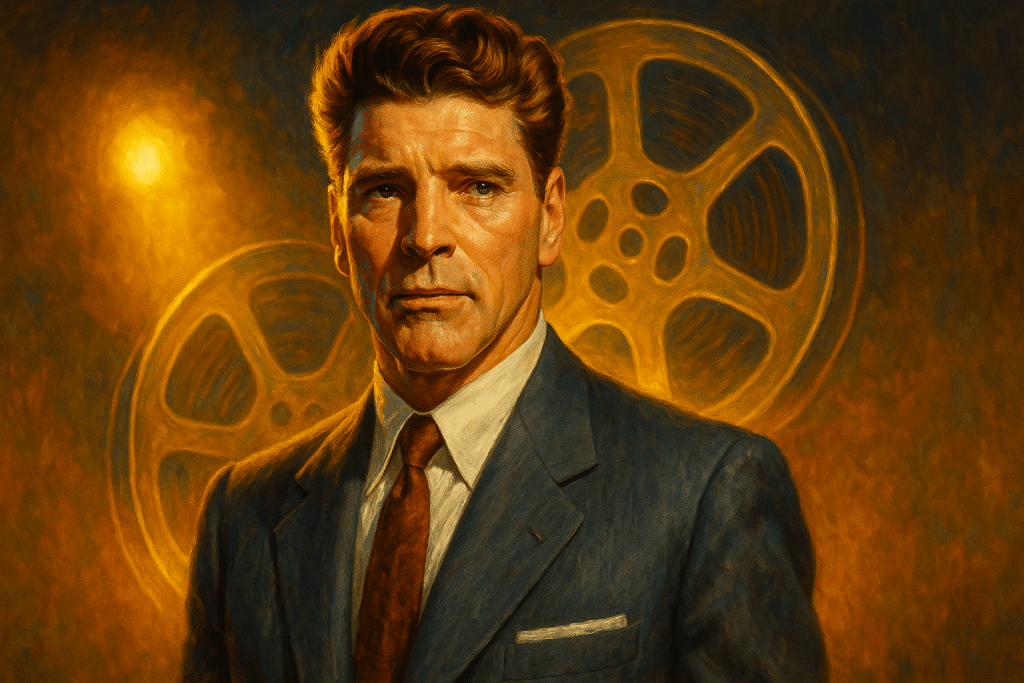
Burt Lancaster’s journey from circus acrobat to Oscar-winning actor remains one of Hollywood’s most fascinating transformation stories. This article is perfect for classic movie fans, film history buffs, and anyone curious about how physical performers can transition into serious dramatic actors.
Burt Lancaster’s remarkable journey reflects the resilience and talent of an extraordinary individual. As we explore his life, it becomes evident how Burt Lancaster’s acrobatic prowess laid the foundation for his Hollywood career.
Moreover, Burt Lancaster’s unique background allowed him to approach acting with a physicality that few could match. This blend of athleticism and artistry positioned Burt Lancaster as a prominent figure in the film industry.
In every film, Burt Lancaster brought a unique blend of strength and vulnerability, captivating audiences worldwide.
In every role, Burt Lancaster brought a depth and nuance that captivated audiences, making him a household name.
Lancaster’s athletic background significantly influenced his screen presence and career choices. We’ll explore how his circus training gave him the confidence and physicality that made him stand out among his peers. You’ll also discover how his military service during World War II changed his perspective on life and pushed him toward acting.
We’ll dive into his breakthrough Hollywood moments and examine the career-defining performances that showcased his incredible range. From action-packed adventure films to intimate character dramas, Lancaster proved he could handle any role. Finally, we’ll examine his Academy Award recognition and the lasting impact he had on cinema, which continues to influence actors today.
Growing up in New York
Burton Stephen Lancaster was born on November 2, 1913, in the bustling streets of East Harlem, a neighborhood that would shape his gritty determination and street-smart sensibilities. The son of James Henry Lancaster, a postal worker, and Elizabeth Roberts Lancaster, Burt grew up in a working-class Irish-American family alongside his four siblings. East Harlem in the 1920s was a melting pot of immigrants and first-generation Americans, where survival required toughness and adaptability – qualities that would later serve Lancaster well both in the circus ring and on movie sets.
It wasn’t just his physical abilities; Burt Lancaster’s on-screen charm and charisma added to his allure, ensuring his lasting popularity.
The Lancaster household valued hard work and discipline. Despite their modest means, Burt’s parents encouraged their children’s athletic pursuits, recognizing that physical prowess could open doors in Depression-era America. The rough-and-tumble neighborhood taught young Burt to be resourceful and fearless, traits that would become his trademark both as a performer and later as one of Hollywood’s most independent-minded stars.
Through his acrobatics, Burt Lancaster pushed the boundaries of what was expected of an actor, setting new standards in cinema.
Athletic Prowess
Lancaster’s exceptional athletic abilities emerged early in his childhood. He demonstrated remarkable coordination, strength, and natural grace, setting him apart from his peers. At DeWitt Clinton High School, he excelled in basketball and baseball, but his true passion lay in gymnastics and acrobatics. His robust build – he stood 6’2″ with broad shoulders and impressive musculature – combined with surprising agility, made him a standout performer.
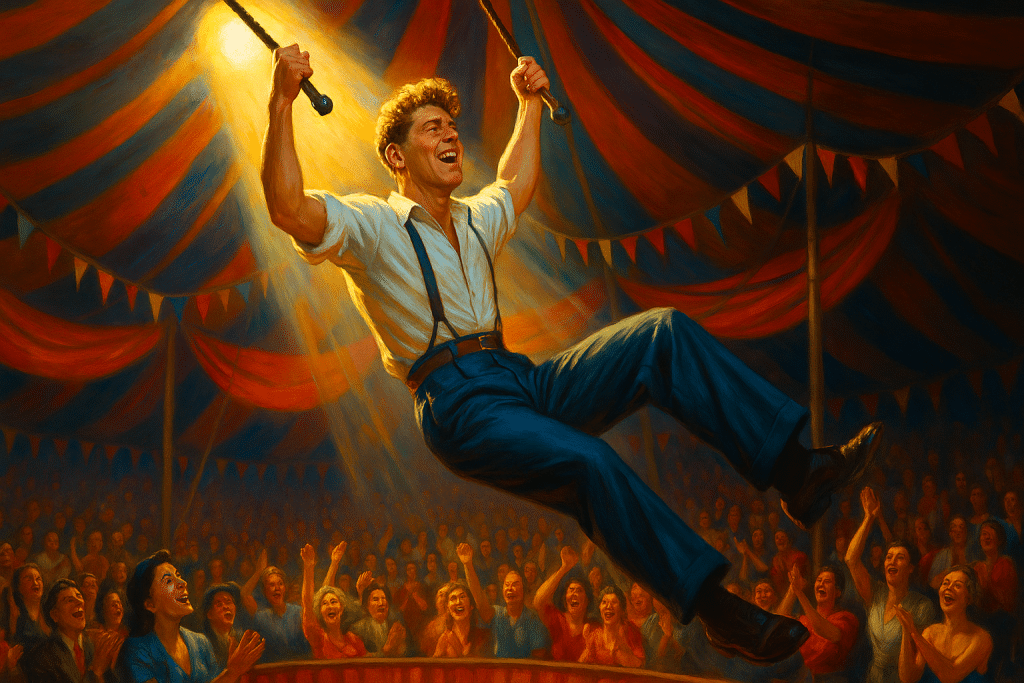
Burt Lancaster spent countless hours perfecting his craft, developing the discipline and precision that gymnastics demanded. He trained rigorously in parallel bars, rings, and floor exercises, building not just physical strength but also the mental focus required for complex routines. This dedication to physical excellence would become a defining characteristic throughout his life, setting the foundation for his later success in both circus performances and action-packed film roles.
Burt Lancaster’s ability to draw on his circus experiences enriched his performances, adding layers to his characters.
Even in his later years, Burt Lancaster continued to challenge himself, taking on roles that showcased his versatility.
Burt Lancaster spent countless hours perfecting his craft, developing the discipline and precision that gymnastics demanded. He trained rigorously in parallel bars, rings, and floor exercises, building not just physical strength but also the mental focus required for complex routines. This dedication to physical excellence would become a defining characteristic throughout his life, setting the foundation for his later success in both circus performances and action-packed film roles.
Circus Career
In 1932, at the age of 19, Lancaster made a pivotal decision that would forever alter his trajectory. He joined the Kay Brothers Circus as a professional acrobat, partnering with childhood friend Nick Cravat in an act called “Lang and Cravat” (Lancaster used “Lang” as his stage name). The duo specialized in horizontal bar routines and became renowned for their daring aerial performances, which combined strength, timing, and showmanship.
Life on the circus circuit was demanding and often dangerous. Burt Lancaster and Cravat traveled across the country, performing multiple shows daily and constantly refining their act. The experience taught Lancaster invaluable lessons about entertainment, audience engagement, and the importance of physical preparation. He learned to read crowds, understand timing, and deliver performances that captivated audiences – skills that would prove essential in his acting career.
The partnership lasted several years until a hand injury forced Lancaster to reconsider his future. However, his circus days had already instilled in him a performer’s instincts and a deep understanding of how to use his body as an instrument of expression.
Physical Skills
Lancaster’s circus background became his secret weapon in Hollywood, setting him apart from traditional leading men who relied primarily on conventional good looks or dramatic training. His acrobatic skills allowed him to perform many of his own stunts, bringing authenticity and raw energy to action sequences that audiences had never seen before.
The physical confidence he developed as an acrobat translated into an unmistakable screen presence. Lancaster moved with the fluid grace of a trained athlete, whether he was scaling castle walls in adventure films or conveying intense emotion in dramatic scenes. His understanding of body mechanics and spatial relationships made him incredibly photogenic, allowing directors to capture dynamic shots that showcased his athleticism.
His circus training also developed his sense of timing and rhythm, crucial elements that enhanced his acting performances. The discipline required for acrobatic routines – where split-second timing could mean the difference between success and serious injury – gave Burt Lancaster an internal metronome that served him well in delivering dialogue and executing complex scenes. This unique combination of physical prowess and performance instincts would become Lancaster’s calling card, helping him create some of cinema’s most memorable and physically demanding roles.
Military Service
As an actor, Burt Lancaster’s work exemplified the power of storytelling, leaving an indelible mark on the film industry.
As we look back at his career, Burt Lancaster’s legacy is one of innovation, excellence, and a commitment to the art of storytelling.
When World War II broke out, Burt Lancaster traded his circus tights for military fatigues, enlisting in the U.S. Army in 1942. Rather than finding himself on the front lines with a rifle, Lancaster’s unique background as a performer caught the attention of military officials who assigned him to the Special Services division. This branch of the Army focused on maintaining troop morale through entertainment and recreational activities.
The Special Services assignment proved to be a perfect match for Lancaster’s skills and temperament. His athletic prowess from his circus days, combined with his natural stage presence, made him an ideal candidate to organize and participate in entertainment programs for fellow servicemen. The Army recognized that keeping soldiers’ spirits up was just as important as military training, and Lancaster’s role became essential to this mission.
Entertaining Troops
Lancaster’s military service became an unexpected acting school. He spent his time organizing variety shows, staging theatrical performances, and even participating in athletic demonstrations for thousands of soldiers stationed across various bases. These weren’t small, intimate performances – Lancaster often found himself in front of audiences of several hundred or even thousands of troops who were hungry for entertainment and a temporary escape from the harsh realities of war.
The experience was transformative for Lancaster’s confidence as a performer. While his circus background had given him physical skills and some stage experience, entertaining military audiences taught him how to command attention, read a crowd, and adapt his performance style to different situations. He learned to project his voice, engage with hecklers, and maintain energy even when performing multiple shows in a single day.
These performances also exposed Lancaster to dramatic acting for the first time. The Special Services productions often included serious dramatic pieces alongside comedy sketches and variety acts. Lancaster discovered that he had a natural talent for dramatic interpretation, a skill that would become crucial to his later Hollywood success. The rough-and-tumble military audiences were unforgiving critics – if a performance didn’t work, soldiers made their displeasure known immediately.
Meeting Future Business Partner Harold Hecht
Perhaps the most significant development during Lancaster’s military service was his meeting with Harold Hecht, a former literary agent and publicist who was also serving in Special Services. Hecht had worked in Hollywood before the war and brought a different perspective to their entertainment productions. While Lancaster provided the physical presence and performance energy, Hecht contributed strategic thinking about show business and entertainment as a commercial enterprise.
The two men developed both a personal friendship and a professional partnership while serving together. Hecht saw potential in Lancaster that went beyond simple entertainment value – he recognized Lancaster’s screen presence and marketability in ways that Lancaster himself hadn’t yet considered. Their collaboration on military shows became a testing ground for ideas about how entertainment could be packaged and presented to audiences.
Their partnership during the war years laid the groundwork for what would become one of Hollywood’s most successful actor-producer relationships. Hecht’s business acumen, combined with Lancaster’s star power, would later result in groundbreaking film productions that challenged traditional Hollywood studio systems. The trust and creative chemistry they developed while entertaining troops would prove invaluable when they later ventured into independent film production together.
Breakthrough into Hollywood “The Killers”
Burt Lancaster’s entry into Hollywood reads like something out of a movie itself. In 1946, talent scout Irving Maas spotted the former circus acrobat performing in a Broadway play and immediately recognized his potential for the screen. Producer Mark Hellinger was seeking an unknown actor to play Swede Andersen in “The Killers,” based on Ernest Hemingway’s short story, and Lancaster seemed the perfect fit for the role.
The casting proved to be lightning in a bottle. Lancaster’s powerful physique, magnetic presence, and natural acting ability made him an instant sensation. His portrayal of the doomed boxer-turned-criminal captivated audiences and critics alike. The film’s success catapulted him from a complete unknown to a major Hollywood star overnight, earning him a contract with producer Hal Wallis.
What made Lancaster’s debut so remarkable was how effortlessly he commanded the screen despite having no formal acting training. His circus background gave him an unusual grace and physical confidence that translated beautifully on camera. Directors found his athletic prowess and willingness to perform his own stunts invaluable, setting him apart from other leading men of the era.
Hecht-Lancaster Productions
Unlike many actors content to work within the studio system, Lancaster had more ambitious goals. In 1947, just one year after his breakthrough, he partnered with his agent Harold Hecht to form Hecht-Lancaster Productions. This bold move made him one of the first major stars to establish his own production company, giving him unprecedented control over his career and film choices.
The partnership proved both financially and artistically rewarding. Their company produced several successful films, including “Kiss the Blood Off My Hands” and “The Flame and the Arrow.” Lancaster understood that creative control meant better roles and higher profits, as he could select projects that showcased his range while maintaining ownership stakes in the productions.
Hecht-Lancaster Productions became a template for other actors seeking independence from studio control. The company’s success demonstrated that stars could effectively manage their own careers while producing quality entertainment. Lancaster’s business acumen matched his acting talent, and he later expanded the partnership to include writer-producer James Hill, forming the Hecht-Hill-Lancaster company.
Early Leading Man Roles
Lancaster’s circus background became his secret weapon in early Hollywood roles. Films like “The Flame and the Arrow” (1950) transformed him into a swashbuckling action hero, complete with acrobatic sword fights and death-defying stunts. His ability to perform complex physical sequences without stunt doubles amazed both audiences and industry professionals.
“Jim Thorpe – All-American” (1951) perfectly matched Lancaster’s athletic prowess with dramatic storytelling. Playing the legendary multi-sport athlete, he brought authenticity to the physical demands of the role while delivering a nuanced performance about triumph and tragedy. His portrayal earned critical acclaim and solidified his reputation as an actor capable of handling both action and emotion.
These early roles established Lancaster’s screen persona as the thinking man’s action hero. Unlike typical muscle-bound stars, he brought intelligence and vulnerability to physically demanding parts. His performances in films like “Ten Tall Men” and “The Crimson Pirate” showcased his unique combination of athletic grace, dramatic skill, and natural charisma that would define his career for decades to come.
“From Here to Eternity”
Lancaster’s portrayal of First Sergeant Milton Warden in “From Here to Eternity” (1953) stands as one of his most compelling dramatic performances. Playing a tough military noncom caught between duty and desire, Lancaster brought a raw intensity to the role that perfectly captured the character’s internal conflict. His passionate affair with Deborah Kerr’s character produced one of cinema’s most iconic beach scenes, where Lancaster’s physical presence and emotional vulnerability created an unforgettable moment of romantic tension.
The film showcased Lancaster’s ability to convey complex emotions beneath a hardened exterior. His Warden was neither hero nor villain but a deeply flawed man struggling with loyalty, love, and the rigid military hierarchy. Lancaster’s performance earned him an Academy Award nomination, proving he could handle serious dramatic material with the same skill he brought to action roles.
“The Crimson Pirate”
“The Crimson Pirate” (1952) allowed Lancaster to fully display the acrobatic skills he’d honed during his circus years. Playing Captain Vallo, a swashbuckling pirate, Lancaster performed many of his own stunts with remarkable grace and athleticism. The film featured elaborate action sequences that required genuine physical prowess, from sword fights to acrobatics on sailing ships.
Lancaster’s circus background became a central selling point for the film. He could swing from ropes, perform handstands, and execute complex gymnastic moves that most actors would need stunt doubles to accomplish. His co-star Nick Cravat, also a former circus performer and Lancaster’s real-life acrobatic partner, joined him in creating some of the most impressive action sequences of the 1950s. The film demonstrated that Lancaster wasn’t just another Hollywood pretty boy – he was a legitimate athlete who could back up his action hero image with real physical ability.
“Sweet Smell of Success”
Burt Lancaster’s remarkable career is a reminder of the transformative power of cinema and the timeless appeal of a great story.
With every role, Burt Lancaster showcased the depth of human experience, connecting with audiences on a profound level.
Lancaster took on one of his most challenging roles as J.J. Hunsecker in “Sweet Smell of Success” (1957), playing a powerful and ruthless newspaper columnist. This performance marked a significant departure from his typical heroic characters, revealing Lancaster’s range as an actor willing to embrace morally ambiguous roles.
Hunsecker was a manipulative powerbroker who controlled people through fear and influence. Lancaster’s portrayal was chilling in its calculated coldness, showing a man who viewed relationships as transactions and loyalty as a commodity to be bought and sold. The film’s sharp dialogue and noir atmosphere provided the perfect backdrop for Lancaster’s intense performance.
Working alongside Tony Curtis, Lancaster created a character study of corruption and power that remains relevant today. His ability to make such an unlikable character compelling demonstrated his growing confidence as a dramatic actor and his willingness to take creative risks that challenged audience expectations.
Throughout his career, Burt Lancaster remained dedicated to his craft, proving that true artistry comes from passion and hard work.
“Birdman of Alcatraz”
Lancaster’s transformation into Robert Stroud in “Birdman of Alcatraz” (1962) represented perhaps his most demanding dramatic role. Playing a convicted murderer who becomes an ornithologist while serving a life sentence, Lancaster spent months preparing for the part by studying Stroud’s mannerisms and speaking with prison officials.
The role required Lancaster to age convincingly over several decades of the character’s life, showing Stroud’s evolution from a violent criminal to a respected bird expert. Lancaster’s performance captured both the man’s intellectual curiosity and his underlying volatility. He brought depth to a character who could have easily become a one-dimensional tale of prison redemption.
The film earned Lancaster another Academy Award nomination and critical praise for his nuanced portrayal of a complex real-life figure. His commitment to the role included learning about ornithology and developing the quiet, methodical mannerisms that defined Stroud’s later years in prison.
Academy Award
The legacy of Burt Lancaster will forever be etched in the annals of film history, reminding us all of the power of cinema to tell compelling stories.
Oscar for “Elmer Gantry”
Burt Lancaster’s portrayal of the charismatic evangelist Elmer Gantry in 1960 represented the pinnacle of his acting career and earned him the Academy Award for Best Actor. His performance as the smooth-talking, morally ambiguous preacher showcased Lancaster’s ability to embody complex characters who walked the line between heroism and villainy. The role demanded both physical presence and emotional depth, qualities that Lancaster delivered with remarkable intensity.
Ultimately, Burt Lancaster’s journey is a remarkable story of talent, hard work, and the pursuit of artistic integrity.
The film adaptation of Sinclair Lewis’s controversial novel provided Lancaster with material that perfectly matched his theatrical background and natural magnetism. His Elmer Gantry was both repulsive and magnetic, a con man whose passionate sermons contained genuine spiritual fervor despite his personal corruption. Lancaster’s performance captured this duality with nuanced precision, creating a character study that resonated with critics and audiences alike.
Director Richard Brooks recognized Lancaster’s unique ability to bring authenticity to morally complicated roles. The actor’s circus background and physical training served him well in the film’s more demanding scenes, particularly those requiring him to command large crowds with evangelical fervor. His Oscar win validated years of careful character work and established him as one of Hollywood’s premier dramatic actors.
As we reflect on his impact, Burt Lancaster’s contributions to the film industry will endure for generations.
Nominations Throughout Career
Lancaster’s Oscar victory was accompanied by several other Academy Award nominations, demonstrating his consistent excellence across different genres and decades. His nomination for Best Actor in “From Here to Eternity” (1953) highlighted his dramatic range in the role of Sergeant Milton Warden. This performance balanced toughness with vulnerability in ways that became a Lancaster trademark.
Burt Lancaster’s dedication to his craft and his unwavering commitment to excellence continue to resonate in the world of cinema.
The versatility that earned him multiple nominations extended beyond traditional leading man roles. His supporting actor nomination for “Atlantic City” (1980), late in his career, showed his willingness to take on character roles and work with emerging directors like Louis Malle. This performance as an aging numbers runner proved that Lancaster could adapt his larger-than-life screen presence to more intimate, character-driven narratives.
| Film | Year | Category | Result |
|---|---|---|---|
| From Here to Eternity | 1953 | Best Actor | Nominated |
| Elmer Gantry | 1960 | Best Actor | Won |
| Birdman of Alcatraz | 1962 | Best Actor | Nominated |
| Atlantic City | 1980 | Best Actor | Nominated |
Critical Praise
Critics consistently praised Lancaster’s ability to bring psychological complexity to his roles, moving far beyond the typical action hero archetype of his era. His performances in films like “Sweet Smell of Success” earned particular acclaim for their dark, unsympathetic qualities, challenging audiences’ expectations of traditional movie stars.
Film critics noted Lancaster’s theatrical training enhanced his screen presence, allowing him to project authority and vulnerability with equal conviction. His background in circus acrobatics contributed to his physical expressiveness, making even his stillest moments charged with potential energy. This combination of physical and emotional intensity became his signature approach to character development.
The critical community recognized Lancaster’s commitment to challenging material throughout his career. His collaborations with innovative directors, such as Luchino Visconti in “The Leopard,” demonstrated his international appeal and artistic ambitions. Critics praised his willingness to work in foreign productions and adapt his American screen persona to different cultural contexts, showing an artistic maturity that extended well beyond commercial Hollywood filmmaking.
Legacy and Impact on Cinema
Burt Lancaster’s influence on cinema is undeniable, and his work continues to inspire new generations of filmmakers and actors alike.
Pioneering Independent Film Production Model
Burt Lancaster revolutionized Hollywood’s traditional studio system by becoming one of the first major stars to form his own production company. In 1948, he co-founded Hecht-Hill-Lancaster Productions with his agent Harold Hecht and screenwriter James Hill. This bold move challenged the iron grip that major studios held over talent and creative decisions.
The company produced some of Lancaster’s most memorable films, including “Marty” (1955), which won the Academy Award for Best Picture, and “Sweet Smell of Success” (1957). Lancaster didn’t just act in these films—he actively participated in script development, casting decisions, and creative direction. This hands-on approach allowed him to take on riskier, more complex characters that the traditional studio system might have rejected.
His production company tackled controversial subjects and unconventional narratives that mainstream Hollywood often shied away from. “The Kentuckian” (1955) marked Lancaster’s directorial debut, showcasing his desire to exert complete control over every aspect of filmmaking. By maintaining ownership of his projects, Lancaster secured better financial returns and retained creative control, setting a precedent that would inspire countless actors in the decades to come.
Influence on Future Actor-Producers
Lancaster’s success as an actor-producer paved the way for future Hollywood stars to follow similar paths. His business model demonstrated that major talent could successfully transition from being employees of the studio system to becoming independent creative forces and business owners.
The ripple effects of Lancaster’s approach can be seen in the careers of later actor-producers like Clint Eastwood, Robert Redford, and, more recently, Brad Pitt and George Clooney. These stars adopted Lancaster’s blueprint of forming production companies to develop projects that aligned with their artistic visions while maintaining financial control.
Lancaster’s willingness to tackle serious, dramatic material through his production company also paved the way for actors to use their star power to bring important stories to the screen. His commitment to producing quality films over easy commercial successes set a standard for actor-producers who sought to make meaningful contributions to cinema, rather than merely capitalize on their celebrity status.
The vertical integration model that Lancaster pioneered—where actors controlled production, distribution, and sometimes exhibition—became a template that modern entertainment companies continue to use today.
Ultimately, Burt Lancaster’s legacy remains a testament to his talent and perseverance, inspiring generations of actors to follow in his footsteps.
Lasting Contribution to American Film Heritage
Lancaster’s filmography represents a treasure trove of American cinema, spanning multiple genres and decades. His performances in classics like “From Here to Eternity,” “Elmer Gantry,” and “The Leopard” continue to be studied in film schools and celebrated by critics worldwide. These films showcase not only his remarkable range as an actor but also his commitment to bringing complex, flawed characters to life.
His athletic background brought a unique physicality to American cinema, influencing how action sequences and character movement were portrayed on screen. Lancaster’s acrobatic skills and natural grace elevated fight scenes, chase sequences, and physical comedy beyond the typical Hollywood conventions of his era.
The diversity of Lancaster’s roles—from swashbuckling adventurers to brooding anti-heroes to religious charlatans—expanded the definition of what a leading man could be in American cinema. He refused to be typecast and consistently chose challenging roles that pushed both his abilities and the expectations of his audience.
Today’s film preservationists and cinema historians recognize Lancaster’s work as essential viewing for understanding the evolution of American film acting. His influence extends beyond entertainment into cultural significance, as many of his films addressed social issues, moral complexity, and the changing American landscape of the mid-20th century.
Burt Lancaster’s journey from performing under circus tents to commanding Hollywood screens shows how life can take the most unexpected turns. His background as an acrobat gave him a unique physicality that set him apart from other actors of his era. At the same time, his military service shaped the depth and intensity with which he approached his roles. When he finally made it to Hollywood, Lancaster didn’t just act—he transformed every character he played with the same athletic grace and emotional power that had carried him through his earlier careers.
Lancaster’s Oscar win wasn’t just recognition of a single performance – it was Hollywood acknowledging a true original who refused to be boxed into any one type of role. From drama to action to romance, he demonstrated that great acting stems from bringing one’s whole life experience to the screen. His legacy reminds us that the most compelling performers are often those who’ve lived fully before they ever stepped in front of a camera. Lancaster proved that sometimes the best preparation for stardom isn’t acting school, but simply living an adventurous life.
How Did Burt Lancaster Die
Burt Lancaster died at age 80 on October 20, 1994, from a heart attack. He passed away at his Century City, Los Angeles home following a period of declining health, including a severe stroke in 1990.

Pingback: Charles Bronson: The Legendary Hollywood Tough Guy Who Defined Action Cinema - History Unearthed