
Actors
The Elegant Audrey Hepburn
Sep
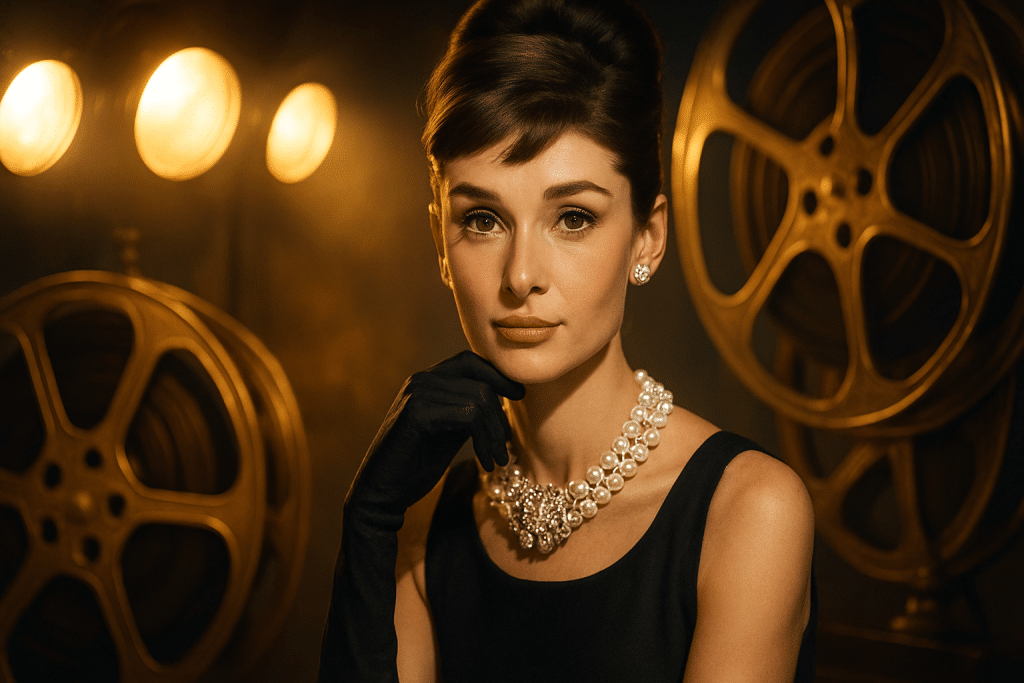
Audrey Hepburn remains one of Hollywood’s most beloved icons, captivating audiences with her grace, style, and genuine warmth. This guide is perfect for classic film enthusiasts, fashion lovers, and anyone curious about the woman behind the timeless elegance.
We’ll explore Hepburn’s remarkable journey, from her challenging early years to her rise as a global superstar. You’ll discover how she revolutionized fashion and created a signature style that continues to influence designers today. We’ll also delve into her most memorable film performances and explore the humanitarian work that defined her later years, highlighting why Audrey Hepburn’s legacy continues to inspire generations of fans worldwide.
Early Life and Path to Stardom
Audrey Hepburn‘s early years were marked by hardship that would forge the steel beneath her delicate exterior. Born Audrey Kathleen Ruston in Brussels in 1929, she experienced the devastation of World War II firsthand during the Nazi occupation of the Netherlands. Her family faced severe food shortages, and like many Dutch children, Audrey suffered from malnutrition that would affect her health for years to come.
The war scattered her family – her father abandoned them when she was just six years old, leaving her mother to raise Audrey and her half-brothers alone. During the occupation, they survived on tulip bulbs and whatever meager rations they could find. Audrey later credited these difficult years with teaching her the value of simple pleasures and developing her deep empathy for those less fortunate.
These experiences created a quiet strength that would serve her throughout her career. The uncertainty and fear of those formative years instilled in her a profound appreciation for stability and kindness, qualities that would become hallmarks of both her personal character and public persona.
Ballet Training That Perfected Her Graceful Posture
After the war, Audrey pursued her passion for dance with unwavering determination. She moved to London in 1948 to study ballet at the prestigious Rambert School, where she trained under Marie Rambert, one of the most influential ballet teachers of the era. Though her wartime malnutrition had left her too tall and weak to become a prima ballerina, the rigorous training transformed her posture and movement in ways that would define her screen presence.
Ballet taught Audrey discipline, poise, and an almost supernatural grace that cameras would later capture beautifully. Her elongated neck, straight shoulders, and fluid movements – all products of her dance training – created a distinctive physicality that set her apart from other actresses of her time. The classical positions and port de bras she learned became second nature, giving her an aristocratic bearing that made her perfect for roles requiring elegance and sophistication.
Even when her ballet dreams ended, Audrey continued to dance in London chorus lines and nightclub revues, where talent scouts would first notice her unique combination of beauty, grace, and stage presence.
Breakthrough Role in Roman Holiday That Launched Her Career
The story of how Audrey landed her star-making role in “Roman Holiday” reads like a Hollywood fairy tale. While performing in the London stage production of “Sauce Tartare,” she caught the eye of a talent scout who recommended her for a small role in a film. This led to a screen test for Paramount Pictures, where director William Wyler was searching for an unknown actress to play Princess Ann opposite Gregory Peck.
Wyler was immediately captivated by Audrey’s natural charm and authenticity. Unlike the bombshell actresses who dominated Hollywood at the time, Audrey possessed a refreshing innocence and vulnerability that made her perfect for the role of a sheltered princess discovering the world. Her screen test revealed not just her acting ability, but her natural charisma and that indefinable quality that separates stars from mere performers.
The success of “Roman Holiday” was unprecedented for a newcomer. Audrey’s performance earned her an Academy Award for Best Actress, making her only the third actress in history to win an Oscar for her debut leading role. The film showcased her perfect blend of sophistication and approachability, establishing the template for the Audrey Hepburn persona that would captivate audiences for decades.
Natural Talent That Captivated Hollywood Directors
What made Audrey truly special wasn’t just her beauty or grace – it was her instinctive understanding of how to be herself in front of the camera. Directors consistently praised her natural ability to convey complex emotions with subtle gestures and expressions. She possessed a rare authenticity that made audiences believe in every character she portrayed.
Her approach to acting was refreshingly unpretentious. While method acting dominated the era, Audrey relied on her intuition and emotional honesty to bring characters to life. This natural talent allowed her to work effectively with demanding directors like Billy Wilder and George Cukor, who appreciated actors who could take direction while maintaining their unique essence.
Hollywood executives quickly recognized that Audrey represented something new and valuable—a sophisticated European sensibility combined with universal appeal. Her multilingual abilities, cultural awareness, and innate elegance made her the perfect ambassador for a new kind of international cinema that was emerging in the 1950s.
Iconic Fashion Legacy and Style Evolution
Collaboration with Givenchy that defined timeless elegance
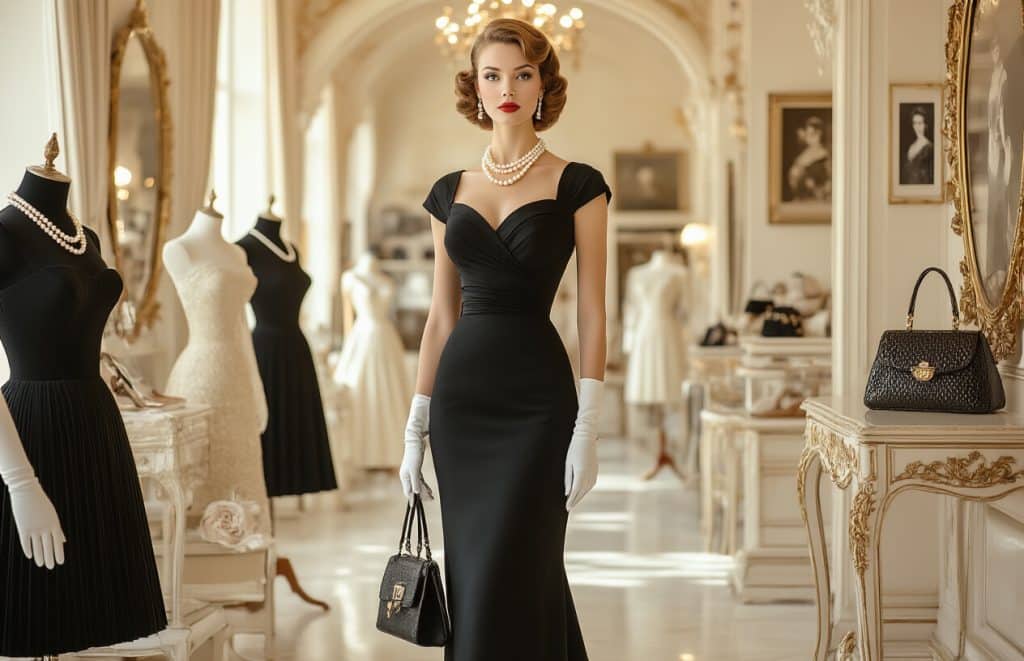
Audrey Hepburn’s partnership with French designer Hubert de Givenchy created one of fashion history’s most celebrated collaborations. Their relationship began in 1953 when Hepburn visited Givenchy’s atelier, expecting to meet the older, established Balenciaga, but instead found the young designer who would become her lifelong friend and style architect.
Givenchy understood Hepburn’s unique appeal immediately. He designed clothes that enhanced her natural grace while maintaining sophisticated simplicity. Their creations featured clean lines, impeccable tailoring, and an understated luxury that perfectly matched Hepburn’s personality. The designer crafted pieces that emphasized her slender silhouette without overwhelming her petite frame.
This partnership extended beyond professional boundaries to form a genuine friendship. Givenchy became Hepburn’s personal couturier, dressing her both on and off screen. He created custom pieces that reflected her preferences for comfort and elegance, understanding that she needed clothes suitable for her active lifestyle while maintaining camera-ready sophistication.
Their collaboration produced countless memorable looks, from the elegant ball gowns in “Sabrina” to the racing attire in “My Fair Lady.” Each piece demonstrated its shared philosophy that true elegance comes from restraint rather than excess. The partnership lasted throughout Hepburn’s career, cementing both their places in fashion history.
Little black dress revolution in Breakfast at Tiffany’s
The opening scene of “Breakfast at Tiffany’s” transformed fashion forever through one simple garment. Hepburn’s character, Holly Golightly, emerged from a taxi wearing a sleek black Givenchy dress that redefined sophistication for an entire generation. This wasn’t just a costume choice but a cultural moment that elevated the little black dress from a practical wardrobe staple to an iconic statement piece.
Givenchy’s creation featured a straight silhouette with a boat neckline, hitting just below the knee with elegant restraint. The dress’s power lay in its simplicity – no excessive embellishments or dramatic details, just perfect proportions and flawless fit. Pearl accessories and oversized sunglasses completed the look, creating an ensemble that epitomized effortless glamour.
The dress became instantly recognizable worldwide, inspiring countless reproductions and interpretations. Women everywhere wanted to capture that same sense of polished ease that Hepburn embodied. The look proved that elegance didn’t require complicated designs or flashy elements – sometimes the most powerful statement comes from refined simplicity.
When the original dress sold at auction in 2006 for nearly $900,000, it confirmed what fashion lovers already knew: this wasn’t just a piece of clothing but a cultural artifact that captured the spirit of an era and the essence of its wearer.
Effortless chic that influenced generations of women
Hepburn’s style philosophy centered on the idea that true elegance appears natural and unforced. She favored pieces that moved with her body rather than restricting it, choosing comfort without sacrificing sophistication. This approach revolutionized women’s fashion by proving that glamour didn’t require suffering or excessive effort.
Her signature elements became the building blocks of modern feminine style:
- Cropped pants and ballet flats for practical elegance
- Turtlenecks and cardigans for casual sophistication
- A-line skirts that flatter various body types
- Statement accessories like scarves and sunglasses
- Neutral color palettes anchored by black and white
Hepburn’s influence extended beyond specific garments to encompass an entire attitude toward dressing. She demonstrated that personal style should reflect one’s individual personality rather than unthinkingly following trends. Her choices always seemed authentic to who she was, creating a template for developing a distinctive personal style.
Modern fashion continues to draw inspiration from Hepburn’s aesthetic. Contemporary designers regularly create collections inspired by her looks, and style guides still recommend her approach to building a timeless wardrobe. Her philosophy that quality trumps quantity resonates with today’s sustainable fashion movement, where thoughtful purchasing decisions matter more than constantly acquiring new pieces.
Women across generations continue to emulate her approach, proving that authentic style transcends temporal boundaries and remains relevant regardless of changing fashion cycles.
Memorable Film Performances and Acting Mastery
Versatile roles that showcased her dramatic range
Audrey Hepburn’s acting repertoire extended far beyond the romantic comedies that made her famous. In “The Nun’s Story” (1959), she delivered one of her most compelling dramatic performances as Sister Luke, a Belgian woman struggling with her religious calling in the Congo. The film required her to carry complex emotional weight without relying on her trademark charm, proving she could handle serious dramatic material with remarkable depth.
Her portrayal in “Wait Until Dark” (1967) stands as perhaps her most intense performance to date. Playing a blind woman terrorized in her own apartment, Hepburn created genuine suspense and vulnerability that had audiences gripping their seats. The role demanded physical precision and emotional authenticity that she delivered masterfully, earning her a fifth Academy Award nomination.
“The Children’s Hour” (1961) saw Hepburn tackle controversial subject matter alongside Shirley MacLaine, playing a teacher falsely accused of having a lesbian relationship. Her performance balanced innocence with growing awareness of society’s cruelty, showcasing her ability to navigate sensitive topics with grace and conviction.
Even in lighter fare like “Charade” (1963), Hepburn demonstrated remarkable versatility. She seamlessly shifted between comedy, romance, and thriller elements, keeping viewers guessing about her character’s true motivations while maintaining her inherent likability.
On-screen chemistry that created unforgettable romantic moments
The magic between Hepburn and her leading men became legendary in Hollywood history. Her partnership with Gregory Peck in “Roman Holiday” (1953) created an instant template for romantic chemistry that felt both sophisticated and genuine. Their age difference never felt uncomfortable because Hepburn brought such maturity and intelligence to her princess character.
With Cary Grant, she found a perfect sparring partner in “Charade.” Their banter crackled with wit and sexual tension, despite their significant age gap. Grant himself admitted he was smitten with her, and their natural affection translated beautifully on screen. The film’s success proved that authentic chemistry couldn’t be manufactured – it had to be felt.
Her collaboration with William Holden in “Sabrina” (1954) showcased a different dynamic. Holden’s rough-around-the-edges Playboy character provided the perfect contrast to her refined charm. Their scenes together balanced tenderness with passion, creating believable romantic development.
Perhaps most memorably, her pairing with George Peppard in “Breakfast at Tiffany’s” produced some of cinema’s most iconic romantic moments. The famous kiss in the rain scene remains a masterclass in building romantic tension, with both actors fully committed to their characters’ emotional journey.
Box office successes that proved her commercial appeal
Hepburn’s films consistently performed well at the box office, making her one of the most bankable stars of her era. “Roman Holiday” grossed over $5 million worldwide – a substantial sum in 1953 – and established her as a major draw for international audiences.
“Sabrina” became one of 1954’s biggest hits, earning nearly $4 million domestically. The film’s success proved that Hepburn could anchor a primary Hollywood production and deliver the kind of box office returns that studios craved.
Her biggest commercial triumph came with “My Fair Lady” (1964), which earned over $72 million worldwide and became one of the decade’s highest-grossing films. Despite controversy over her casting instead of the original Broadway star Julie Andrews, audiences flocked to see Hepburn’s interpretation of Eliza Doolittle.
“Breakfast at Tiffany’s” generated impressive returns relative to its modest budget, earning over $14 million worldwide. The film’s enduring popularity has continued generating revenue through home video, streaming, and merchandise sales decades after its release.
Even her later dramatic works, such as “Wait Until Dark,” proved commercially viable, earning $10 million against its small budget and demonstrating that audiences would follow Hepburn into different genres.
Academy Award recognition for exceptional talent
Hepburn’s relationship with the Academy Awards reflected both her talent and the industry’s evolving recognition of different types of performances. Her Best Actress win for “Roman Holiday” in 1954 came as a surprise to many, including Hepburn herself, who was competing against established stars like Deborah Kerr and Leslie Caron.
Her subsequent nominations demonstrated the Academy’s continued appreciation for her work across different genres. “Sabrina” earned her a second nomination, recognizing her ability to balance comedy and drama within a single performance.
“The Nun’s Story” brought her third nomination for what many consider her most challenging dramatic role. The film’s serious subject matter and her committed performance showed Academy voters that she had grown significantly as an actress since her debut.
“Breakfast at Tiffany’s” generated her fourth nomination, though many felt the film’s commercial success overshadowed her nuanced portrayal of Holly Golightly’s complexity and vulnerability.
Her final nomination for “Wait Until Dark” came 13 years after her win, proving her sustained excellence and the Academy’s recognition of her dramatic evolution. Though she didn’t win again, her five nominations across 14 years demonstrated remarkable consistency and growth as a performer.
Personal Values and Humanitarian Work
UNICEF ambassadorship that changed children’s lives worldwide
Audrey Hepburn’s transformation from Hollywood icon to humanitarian began in 1988 when she accepted the role of Goodwill Ambassador for UNICEF. This wasn’t just another celebrity endorsement – it became her most meaningful calling. She traveled to some of the world’s most challenging regions, including Ethiopia, Sudan, Bangladesh, and Vietnam, witnessing firsthand the struggles of children living in poverty, conflict, and devastation.
Her field visits were powerful and authentic. In Ethiopia during the 1988 famine, she held malnourished children in her arms and spoke directly to cameras about their urgent needs. Unlike many celebrity ambassadors who make brief appearances, Hepburn immersed herself completely in understanding the complexities of child welfare issues. She walked through refugee camps, sat with families in their homes, and listened to personal stories that shaped her advocacy work.
Through her efforts, UNICEF raised millions of dollars and brought global attention to children’s rights. Her speeches at the United Nations weren’t polished Hollywood performances – they were heartfelt pleas that moved world leaders to action. She used her star power strategically, understanding that her fame could open doors and hearts that might otherwise remain closed to these critical humanitarian causes.
Compassionate nature that extended beyond Hollywood glamour
The woman who graced red carpets with unmatched elegance possessed a deeply empathetic soul that few truly understood during her acting career. Those who worked closely with Hepburn often described her genuine concern for others, from film crew members to strangers she encountered on the street. This wasn’t manufactured kindness for publicity – it was an authentic part of her character that predated her fame.
Friends and colleagues recall countless instances of Hepburn’s quiet generosity. She regularly sent money to struggling actors, visited sick friends in hospitals without fanfare, and maintained lifelong relationships with people regardless of their social status. Her son Sean Ferrer later revealed that their home was always open to people in need, and his mother never sought recognition for her private acts of kindness.
What made her compassion remarkable was its consistency across all aspects of her life. Whether comforting a crying child on set or supporting a friend through divorce, she approached each situation with the same genuine care. This emotional intelligence and natural empathy became the foundation for her later humanitarian work, proving that her charitable efforts weren’t a career move but an extension of her true self.
Dedication to helping underprivileged communities
Hepburn’s commitment to humanitarian causes went far beyond photo opportunities and fundraising galas. She dedicated the final years of her life to understanding and addressing systemic issues affecting the world’s most vulnerable populations. Her approach was methodical and deeply personal – she studied UNICEF reports, met with field workers, and educated herself about international development challenges.
Her work focused particularly on children’s health, education, and protection from exploitation. She championed vaccination programs, clean water initiatives, and educational opportunities for girls in developing countries. During her missions, she didn’t just observe – she participated in feeding programs, helped distribute supplies, and spent hours talking with local community leaders to understand their specific needs and challenges.
The impact of her dedication extended beyond her lifetime. The Audrey Hepburn Children’s Fund, established after her death, continues her mission of helping disadvantaged children worldwide. Her approach to humanitarian work became a model for other celebrities, demonstrating that meaningful change requires genuine commitment, continuous learning, and a willingness to use one’s platform for purposes greater than personal gain. She proved that true elegance lies not in what you wear, but in how you treat the most vulnerable members of society.
Lasting Cultural Impact and Modern Relevance
Beauty Standards Redefined Through Natural Elegance
Audrey Hepburn transformed the world’s perception of feminine beauty during a time when curvaceous figures dominated Hollywood. Her slender frame, pixie haircut, and understated makeup challenged the bombshell aesthetic popularized by stars like Marilyn Monroe. Rather than conforming to existing beauty ideals, Hepburn created her own standard that celebrated natural grace over manufactured glamour.
Her approach to beauty emphasized simplicity and authenticity. The famous little black dress from “Breakfast at Tiffany’s” became a symbol of effortless sophistication, proving that elegance didn’t require elaborate styling or excessive accessories. Women worldwide began embracing minimalist makeup routines, focusing on defined eyebrows, subtle eye makeup, and natural-looking skin rather than heavy foundation and dramatic contouring.
This shift toward natural beauty continues to influence contemporary standards. Today’s beauty trends often cycle back to Hepburn’s minimalist philosophy, with “no-makeup makeup” looks and the celebration of natural features becoming mainstream. Her influence can be seen in modern beauty campaigns that prioritize authenticity over perfection, encouraging women to embrace their unique features rather than conforming to unrealistic ideals.
Fashion Inspiration That Continues Influencing Contemporary Style
The collaboration between Hepburn and designer Hubert de Givenchy created timeless pieces that remain relevant decades later. Their partnership produced iconic looks that transcended seasonal trends, establishing a template for sophisticated dressing that fashion designers still reference today.
Key elements of Hepburn’s style continue to appear in contemporary fashion:
- The Little Black Dress: Simple, well-tailored silhouettes that work for multiple occasions
- Ballet Flats: Comfortable yet chic footwear that prioritizes practicality without sacrificing style
- Capri Pants: Slim-fitting trousers that became a wardrobe staple for casual elegance
- Oversized Sunglasses: Statement accessories that add mystery and sophistication
- Pearl Accessories: Classic jewelry that elevates any outfit
Modern fashion brands regularly create collections inspired by Hepburn’s aesthetic. High-end designers like Valentino, Chanel, and Dior have referenced her style in runway shows, while fast-fashion retailers consistently offer “Audrey-inspired” pieces. Her influence extends beyond clothing to encompass an entire approach to personal style that values quality over quantity and timeless appeal over fleeting trends.
Fashion bloggers and style influencers frequently cite Hepburn as their inspiration, creating modern interpretations of her classic looks. Her ability to make simple pieces look extraordinary continues to resonate with women seeking sophisticated style solutions that work across different life stages and occasions.
Quotes and Philosophy That Motivate Women Today
Hepburn’s words carry wisdom that transcends her era, offering guidance on beauty, self-worth, and living authentically. Her most famous quote, “The beauty of a woman is not in a facial mode, but the true beauty in a woman is reflected in her soul,” challenges society’s obsession with physical appearance and encourages deeper self-reflection.
Her philosophy emphasized inner beauty and personal growth:
- On confidence: “Nothing is impossible, the word itself says ‘I’m possible!'”
- On kindness: “As you grow older, you will discover that you have two hands, one for helping yourself, the other for helping others”
- On elegance: “Elegance is the only beauty that never fades”
- On self-acceptance: “I never think of myself as an icon. What is in other people’s minds is not in my mind.”
These quotes regularly appear on social media platforms, inspiring millions of followers seeking motivation and perspective. Life coaches, therapists, and self-help authors frequently reference Hepburn’s philosophy when discussing self-esteem and personal development. Her emphasis on kindness and humanitarian service particularly resonates with younger generations seeking purpose beyond material success.
Women entrepreneurs and business leaders often cite her quotes in presentations and interviews, using her wisdom to navigate professional challenges while maintaining personal values. Her balanced approach to success—combining professional achievement with personal fulfillment and social responsibility—offers a blueprint for modern women juggling multiple roles and aspirations.
Legacy Preservation Through Film Restoration and Tributes
Film preservation societies and movie studios have invested significant resources in restoring Hepburn’s filmography, ensuring future generations can experience her performances in high quality. The Academy of Motion Picture Arts and Sciences has undertaken extensive restoration projects for classics such as “Roman Holiday” and “My Fair Lady,” utilizing advanced digital technology to enhance both visual and audio quality while preserving the films’ original artistic integrity.
Documentary filmmakers continue exploring her life and impact through new lenses. Recent projects examine her humanitarian work with UNICEF, her relationships with designers and directors, and her influence on subsequent generations of actresses. These documentaries often feature previously unreleased footage and interviews, providing fresh insights into her personality and professional methods.
Museums worldwide regularly feature exhibitions dedicated to her style and cultural impact. The Victoria and Albert Museum in London, the Fashion Institute of Technology in New York, and the Palais Galliera in Paris have all hosted major exhibitions showcasing her clothing, photographs, and personal items. These exhibitions draw massive crowds, demonstrating sustained public interest in her legacy.
Modern tributes take various forms, from fashion collections to charitable foundations established in her name. The Audrey Hepburn Children’s Fund continues her humanitarian work, while fashion weeks regularly feature designers explicitly referencing her aesthetic. Broadway and West End productions periodically revive shows associated with her career, introducing new audiences to her theatrical contributions.
Digital platforms have created new opportunities for legacy preservation. Streaming services feature curated collections of her films, while social media accounts dedicated to her memory share daily inspiration and historical content. These platforms ensure her influence remains accessible to contemporary audiences while fostering communities of admirers who celebrate her ongoing relevance.
Conclusion
Audrey Hepburn left us with so much more than beautiful movies and stunning fashion moments. Her journey from a war-torn childhood to Hollywood stardom shows us that grace and determination can take you anywhere. She didn’t just wear elegant clothes – she helped define what timeless style truly means, making even the simplest pieces look absolutely magical.
What makes Audrey truly special is how she used her fame for good. Her work with UNICEF demonstrated that true beauty stems from caring about others and making a positive impact in the world. Even decades after her passing, young women continue to look up to her as the epitome of how to be both glamorous and genuine. Take a page from Audrey’s book: embrace your unique style, stay true to your values, and remember that the most elegant thing you can do is help others along the way.
