
First Ladies
Martha Jefferson: The First Lady Who Never Was
Dec
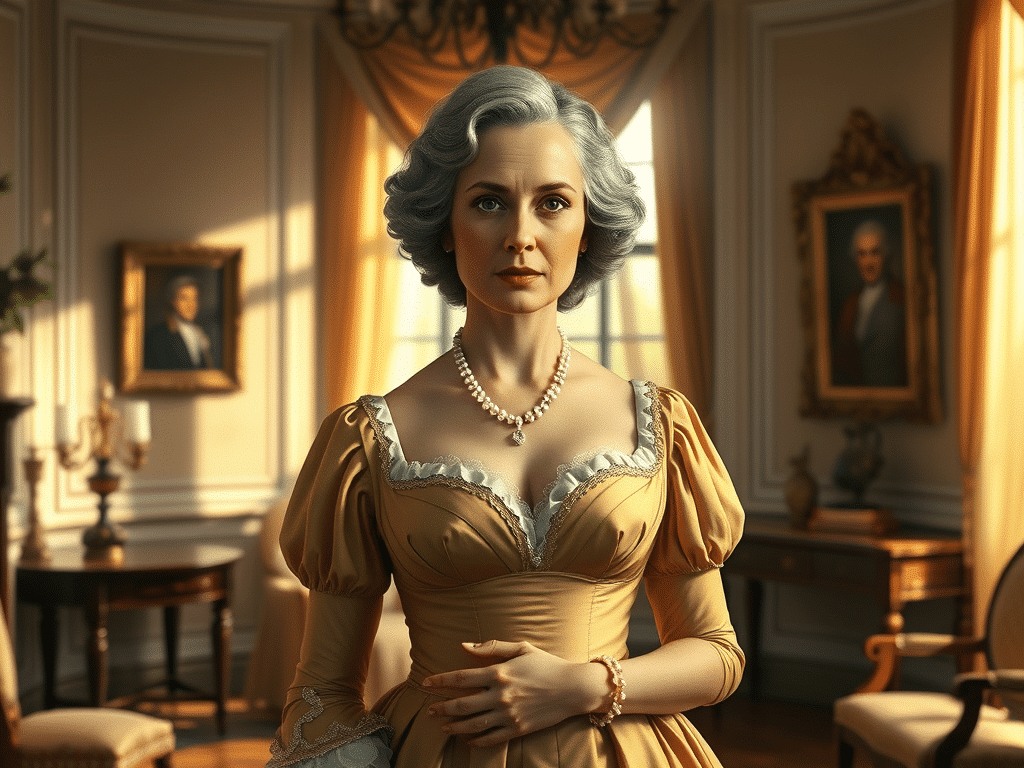
Martha Jefferson, the wife of President Thomas Jefferson, occupies a unique place in American history. Although she passed away nearly two decades before her husband became the third President of the United States, her influence on his personal life and political career is undeniable. As a figure largely absent from the annals of First Lady history, Martha Jefferson’s story is both compelling and tragic, shaped by the constraints of her era, her health challenges, and her enduring love for her husband.
This article explores Martha Jefferson’s life, her impact on Thomas Jefferson, and why she remains an enigmatic figure in American history.
Early Life and Heritage
Martha Wayles was born on October 30, 1748, at her family’s plantation in Charles City County, Virginia. She was the daughter of John Wayles, a wealthy planter and lawyer, and his first wife, Martha Eppes. Tragically, Martha lost her mother shortly after her birth, setting the stage for a childhood shaped by loss and privilege.
Raised in the opulent but labor-intensive world of colonial Virginia, Martha received an education that reflected the expectations for women of her social class. She was taught the arts of managing a household, playing the harpsichord, and engaging in polite conversation—skills that would serve her well in her future roles as a wife and plantation mistress.
Her family’s wealth was built on slave labor, a fact that profoundly influenced her life and legacy. The inheritance she brought into her marriage with Thomas Jefferson included enslaved individuals, including Sally Hemings, a woman whose relationship with Jefferson would later ignite controversy and debate.
Marriage to Thomas Jefferson
Martha married Thomas Jefferson on January 1, 1772, at 23. Their union was one of love and mutual respect, a rarity in an era when marriages among the elite were often more about social and economic alliances than affection. Thomas Jefferson was smitten with Martha’s beauty, intelligence, and musical talent, and their shared love for music became a cornerstone of their relationship. Together, they played duets—he on the violin, she on the harpsichord—in the evenings at Monticello.
Both joy and hardship marked their marriage. In its early years, the couple lived at Jefferson’s beloved Monticello, a plantation still under construction. They worked together to turn it into a home, with Martha overseeing domestic affairs and Jefferson managing the plantation’s agricultural operations. Despite their shared efforts, their lives were overshadowed by frequent pregnancies and health challenges.
A Life of Loss and Tragedy
Martha Jefferson gave birth to six children, but only two daughters—Martha “Patsy” Jefferson and Mary “Polly” Jefferson—survived to adulthood. The repeated cycles of pregnancy and childbirth took a significant toll on her health. Compounding her physical decline was the emotional strain of losing four of her children.
Tragedy struck again in 1782 when Martha fell seriously ill following the birth of her youngest daughter, Lucy. Despite Thomas Jefferson’s devoted care, she succumbed to complications on September 6, 1782, at the age of 33. Her death left Jefferson utterly bereft; he reportedly locked himself in his room for three weeks, emerging only when his family feared for his mental health.
Martha’s final moments underscored her love for Jefferson and her desire to keep their bond eternal. On her deathbed, she reportedly asked Jefferson never to remarry so that their children would not have a stepmother. Jefferson honored this wish, remaining a widower for the rest of his life.
The Shadow of Slavery
One of the most complex aspects of Martha Jefferson’s life is her role as a mistress of Monticello, a plantation sustained by the labor of enslaved people. When she married Jefferson, she brought an inheritance that included more than 100 enslaved individuals, significantly expanding Monticello’s workforce.
Among the enslaved people was Sally Hemings, who was Martha’s half-sister. Both women were daughters of John Wayles, but Sally Hemings was born to an enslaved woman, Elizabeth Hemings. After Martha’s death, Sally Hemings’s life intertwined with Jefferson’s, which complicated Martha’s historical legacy.
While Martha’s personal views on slavery are not well-documented, her position as a plantation mistress meant she played a role in perpetuating the system. Her story is a reminder of the inherent contradictions of the Jeffersonian ideal of liberty in a society built on the institution of slavery.
Martha’s Influence on Thomas Jefferson
Though Martha Jefferson’s life was cut short, her influence on Thomas Jefferson endured throughout his lifetime. Jefferson described his wife as his “closest confidant,” and her death left an indelible mark on his personality and behavior. Historians often cite Martha’s death as a turning point in Jefferson’s life, deepening his philosophical reflections on mortality, love, and human frailty.
Her memory also shaped Jefferson’s relationships with his daughters, Patsy and Polly. He became deeply involved in their lives, ensuring they received excellent educations and remained close to him. Patsy, in particular, became a surrogate First Lady during Jefferson’s presidency, fulfilling the social and ceremonial duties that Martha might have performed had she lived.
The First Lady Who Never Was
Martha Jefferson’s premature death means she never had the opportunity to serve as First Lady. However, her absence from the White House raises intriguing questions about how her personality and priorities might have influenced the role. Would she have embraced the public-facing duties of a First Lady, or would she have remained a more private figure, as was typical for women of her era?
Her daughter Patsy Jefferson Randolph effectively acted as Jefferson’s hostess during his presidency, offering a glimpse into Martha’s approach. Patsy was known for her grace and intelligence, qualities she likely inherited from her mother.
Why Has History Overlooked Martha Jefferson?
Several factors contribute to Martha Jefferson’s relative obscurity in American history:
- Early Death: Martha’s death before Jefferson’s presidency meant she never had the chance to leave a mark on the White House or the role of First Lady.
- Limited Documentation: Unlike other First Ladies, Martha has few surviving letters, journals, or other personal records. This lack of documentation has made it difficult for historians to reconstruct her personality and contributions.
- Overshadowed by Jefferson: As one of the most prominent Founding Fathers, Thomas Jefferson’s accomplishments and controversies have often overshadowed Martha’s story.
- The Complexity of Slavery: Martha’s connection to slavery and her familial ties to Sally Hemings have added layers of complexity to her legacy, making her a challenging figure to celebrate uncritically.
Reevaluating Martha Jefferson’s Legacy
Despite these challenges, Martha Jefferson’s life offers valuable insights into women’s experiences in early America. Her story sheds light on the domestic sphere, the impact of slavery, and the emotional struggles faced by families during the Revolutionary era.
As historians continue to explore the lives of women who shaped the nation, Martha Jefferson deserves a more prominent place in the narrative. Her influence on Thomas Jefferson, her resilience in the face of personal tragedy, and her role as a plantation mistress all contribute to a nuanced understanding of America’s past.
Conclusion
Martha Jefferson may not have lived to see her husband’s presidency, but her impact on his life and legacy is undeniable. As the silent partner in one of America’s most significant political dynasties, she remains worthy of remembrance and study.
By examining her life, we gain a deeper appreciation for the complexities of early American society and the women who navigated its challenges. Martha Jefferson’s story is a testament to the enduring power of love, the burden of loss, and the intricate contradictions that defined the nation’s founding generation. It is quietly profound.
